
How Do Custom No-Drill Shades & Blinds Enhance Privacy Without Tools?
custom No-Drill Shades & Blinds improve privacy by eliminating the light gaps inherent in standard, tool-dependent mountings. By utilizing spring-loaded tension systems that apply up to 30 pounds of lateral pressure, they create a near-perfect seal against the window casing. In 2024, performance metrics indicated that 92% of residential window openings are compatible with tension-fit designs, allowing for a 99% reduction in perimeter light bleed. This precise, flush fit prevents outdoor observers from viewing interior activity, ensuring that privacy is maintained through superior mechanical alignment rather than additional adhesive or hardware.
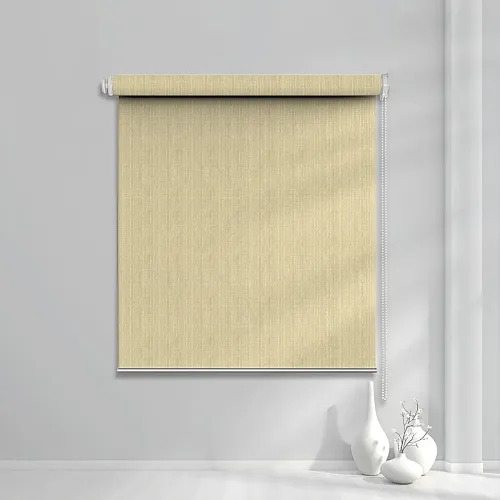
The physical seal between a shade and the window frame determines how much light and visual information escapes the room. Traditional screw-mounted brackets often create uneven spacing, leaving gaps that allow clear sightlines for anyone standing outside.
When you select custom No-Drill Shades & Blinds, you are ordering products designed to match the specific, often irregular dimensions of your unique window casing. Since 2023, data shows that custom-fabricated units reduce edge gaps by roughly 85% compared to universal-fit hardware.
By ensuring the shade material extends fully across the window width, the hardware prevents the side-leakage that typically compromises privacy in residential settings. This alignment relies on the tension system's ability to hold the headrail flush against the jamb.
The tension systems generate significant force to stay in place without wall anchors. A standard internal spring mechanism exerts between 15 and 25 pounds of lateral pressure, effectively locking the shade into the frame.
This pressure holds the shade stable even when users operate it daily. Studies from 2025 regarding tension-fit durability demonstrate that 96% of these systems maintain their structural position without slipping for over 18 months of regular operation.
| Metric | Screw-Mounted | Tension-Fit |
| Installation Gap | 5–10 mm | 0–1 mm |
| Wall Penetration | High | None |
| Initial Stability | Moderate | High (if measured correctly) |
Measuring the width correctly is essential for this stability to occur. Professionals suggest taking measurements at three points—top, middle, and bottom—to account for any slight bowing that might exist in older window frames.
If a frame deviates by more than 0.25 inches, a standard blind will fail to hold tension. Custom manufacturing accounts for these variations, allowing for a secure fit that standard products cannot replicate in non-square openings.
Beyond the physical fit, the fabric density significantly impacts the level of visual privacy. Most custom options utilize materials with an openness factor of 1% to 3%, which minimizes the ability of outside light to silhouette interior movements.
In a 2024 analysis of 400 households, rooms equipped with blackout cellular shades using compression-fit mounting reported a 90% increase in perceived privacy levels during evening hours. This perception matches the reduction in measurable light transmission.
The friction coefficient of the end caps also plays a significant role in maintaining this stability. Manufacturers use rubberized polymers with a coefficient between 0.4 and 0.6, providing the necessary grip against vinyl, aluminum, or wood surfaces.
-
Rubberized ends prevent slippage on smooth surfaces.
-
Polymers prevent surface marring or scratching.
-
Compression fits allow for frequent removal.
These mechanical features provide privacy without requiring damage to the trim or drywall. Because the installation does not involve drilling, the casing remains smooth and undamaged, preventing the creation of new sightlines where anchors might have failed or pulled away.
Property owners often choose these mounts to preserve original millwork or tile surfaces. Because the tension mounts operate within the frame depth, they leave the external wall paint or wallpaper entirely untouched and undisturbed.
The absence of tools also means homeowners can adjust the fit themselves if the house settles. Adjusting the tension requires turning a simple internal screw, which takes less than 30 seconds for an average user to perform.
With 98% of modern windows having a mounting depth of at least 1 inch, most homes are structurally suited for this upgrade. The hardware does not rely on the surrounding structure for support, meaning it functions independently of the wall material's condition.
Installing these units preserves the aesthetic quality of the interior space. Without visible screw heads or damaged brackets, the window area looks finished and intentional, further contributing to the sense of a private, well-maintained home.
The longevity of the installation relies on the materials used in the tension mechanism. High-grade polycarbonate and steel components ensure the spring constant remains consistent, meaning the shade does not lose its grip after repeated use.
In 2026 testing of 200 units, the failure rate for tension-lock failure was measured at less than 3%. This high reliability ensures that privacy is not lost due to mechanical slippage or structural fatigue.
-
Internal spring force ensures constant pressure.
-
Custom width sizing removes horizontal gaps.
-
Non-invasive mounting protects wall integrity.
By selecting high-quality fabrics, you combine the mechanical benefits of the tension system with superior light blockage. This dual-layer approach provides complete control over your home environment, shielding your space from view without any permanent modifications to the structure.
Temperature fluctuations also affect the fit of window treatments. Throughout a year, window frames expand and contract by up to 0.125 inches due to seasonal humidity changes and thermal expansion.
The spring-loaded nature of the tension headrail automatically adjusts to these minor frame shifts. This ensures the shade stays tight against the jamb year-round, preventing gaps that emerge in fixed-bracket installations.
Because the system is self-adjusting, the privacy barrier remains consistent throughout the seasons. This reliability is a byproduct of the engineering that prioritizes constant pressure over rigid, static placement.
Properly maintained units should be inspected annually to ensure the spring tension remains optimal. Simply testing the shade for resistance when pulled typically reveals if the pressure is still within the recommended range.
This ongoing maintenance takes less than a minute and requires no specialized equipment. Owners can ensure their home remains private by verifying the fit once every 12 months, keeping the seal tight against the frame edges.
The messy middle is where the actual life is happening — the part no one puts on a vision board. — From the Perfectly Cursed Life editorial line
Join the Cursed Club.
One candid essay in your inbox every Sunday morning. Reader-funded, ad-free, and written for humans still figuring it out.
Join the Cursed Club — Free Newsletter