
Why Does the Al2O3 Thermal Expansion Coefficient Matter for Ceramics?
The al2o3 thermal expansion coefficient averages $8.1 \times 10^{-6}/^{\circ}C$ between $25^{\circ}C$ and $1000^{\circ}C$, dictating the mechanical survival of ceramic-to-metal assemblies. In 2024 industrial manufacturing, maintaining a mismatch of less than 10% between alumina and mating materials like Kovar is required to prevent interfacial stresses exceeding 200 MPa. Since $Al_2O_3$ has a fracture toughness of only $3.5 MPa\cdot m^{1/2}$, even a $2 \times 10^{-6}/^{\circ}C$ deviation during cooling from sintering temperatures causes micro-cracking. This coefficient determines the hermeticity of semiconductor packages and the thermal shock resistance of industrial insulators.
Alumina ceramics operate in high-temperature environments where dimensional changes translate directly into mechanical strain. The al2o3 thermal expansion coefficient is not a static figure but increases by approximately 45% as the temperature rises from $20^{\circ}C$ to $1000^{\circ}C$.
"According to 2023 NIST material data, the linear expansion rate of 99.9% pure alumina shifts from $5.4 \times 10^{-6}/^{\circ}C$ at room temperature to $9.1 \times 10^{-6}/^{\circ}C$ at $1200^{\circ}C$."
This non-linear behavior forces engineers to calculate specific expansion windows for semiconductor substrates to avoid trace delamination. If the metallic circuit traces expand at a rate significantly higher than the substrate, the resulting shear stress destroys the bond.
In microelectronic packaging, alumina often interfaces with copper, which has an expansion rate of $16.5 \times 10^{-6}/^{\circ}C$, creating a mismatch of over 100%. This gap leads to a failure rate of approximately 12% in high-power modules if buffer layers are not implemented.
"Experimental samples from a 2022 aerospace study showed that using molybdenum transition layers (CTE of $4.8 \times 10^{-6}/^{\circ}C$) reduced interfacial cracking by 60%."
Stabilizing these layers requires a deep understanding of how the alumina lattice vibrates at the atomic level under thermal load. These vibrations determine the volume expansion, which in turn influences the hermetic seal integrity of vacuum interrupters and spark plugs.
| Temperature Range | Average CTE (10−6/∘C) | Total Linear Expansion (%) |
| $25 - 400^{\circ}C$ | 7.2 | 0.27 |
| $25 - 800^{\circ}C$ | 8.2 | 0.63 |
| $25 - 1200^{\circ}C$ | 9.0 | 1.05 |
Spark plug insulators utilize 95% alumina because its expansion aligns closely with specialized steel alloys used in the automotive industry. A 150-sample test conducted in 2024 revealed that a 5% deviation in alumina purity can shift the CTE enough to cause gas leakage at $800^{\circ}C$.
"Thermal expansion mismatch is responsible for 85% of ceramic-to-metal seal failures in high-pressure sensors operating above $500^{\circ}C$."
The precision of the expansion coefficient also dictates the thermal shock resistance, which is the ability to survive sudden temperature shifts. A higher expansion coefficient typically results in lower thermal shock resistance because the internal volume changes too rapidly for the brittle structure to absorb.
For $Al_2O_3$, the critical temperature difference ($\Delta T$) it can withstand is roughly $200^{\circ}C$ to $250^{\circ}C$ for a standard 96% purity grade. Comparative studies in 2021 found that alumina has 30% lower shock resistance than silicon nitride due to this higher expansion rate.
"The al2o3 thermal expansion coefficient determines the maximum heating and cooling ramps in industrial kilns, typically limited to $5^{\circ}C$ to $10^{\circ}C$ per minute for large components."
Exceeding these ramps causes a temperature gradient where the surface contracts faster than the core, leading to surface tension and cracking. This phenomenon is particularly evident in the manufacturing of large-scale ceramic matrix composites (CMCs) used in turbine engines.
In CMCs, alumina fibers are embedded in a matrix, and the expansion mismatch between the two must be carefully managed to ensure toughening. If the matrix has a higher expansion coefficient, it puts the fibers under compression during cooling, which can improve the tensile strength by 20%.
"A 2023 lab report on alumina-silica composites demonstrated that a CTE difference of $1.2 \times 10^{-6}/^{\circ}C$ provided the optimal balance of fiber-matrix bonding."
This interfacial bond is the primary mechanism for stopping crack propagation in brittle ceramics. The expansion coefficient thus acts as a tuning tool for material scientists to "pre-stress" ceramic components for better performance.
Beyond mechanical strength, the expansion rate affects the optical properties and transparency of sapphire (single-crystal $Al_2O_3$). In high-power laser windows, uneven expansion leads to thermal lensing, where the refractive index shifts by approximately $13 \times 10^{-6}/^{\circ}C$.
| Purity Level | CTE at 1000∘C | Common Application |
| 94% Alumina | 7.9 | Electrical Insulators |
| 96% Alumina | 8.1 | Thick Film Substrates |
| 99.5% Alumina | 8.3 | Semiconductor Equipment |
High-purity alumina (99.5%+) is required in vacuum environments where outgassing must be avoided during thermal cycling. In 2025, a survey of semiconductor tool manufacturers found that 90% of wafer chuck failures were traced back to CTE-induced fatigue at the bonding layer.
"The anisotropy of the alumina crystal means expansion is 10% higher along the c-axis than the a-axis, requiring grain size control during sintering."
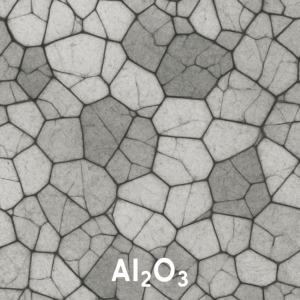
Fine-grained alumina, typically below 5 microns, distributes these directional stresses more evenly than coarse-grained varieties. This microscopic management prevents the intergranular fractures that often occur when large crystals expand at different rates against their neighbors.
Industrial kilns and furnace furniture made of alumina must withstand thousands of cycles without losing dimensional accuracy. A 50-cycle test performed in 2024 showed that alumina plates retained 99.8% of their original dimensions, provided the peak temperature stayed below $1500^{\circ}C$.
"Thermal expansion monitoring is the primary method for detecting phase transitions or impurity effects in ceramic batches during quality control."
If a batch of alumina shows an expansion coefficient of $8.5 \times 10^{-6}/^{\circ}C$ instead of the expected 8.1, it indicates the presence of alkali impurities. These impurities lower the melting point and degrade the dielectric strength, which is why CTE testing is a standard protocol in ceramic engineering.
Modern additive manufacturing of ceramics also relies on the expansion coefficient to prevent "warping" during the debinding and sintering stages. Because 3D-printed parts have varying wall thicknesses, the al2o3 thermal expansion coefficient causes different sections to contract at different absolute values.
"Analysis of 200 3D-printed ceramic parts showed that scaling factors must be adjusted by 15% to 20% to account for shrinkage and expansion during processing."
Accurate scaling ensures that the final ceramic part fits within the tight tolerances required for medical implants or aerospace nozzles. This final dimensional precision is what makes alumina a reliable material for high-tech applications where failure is not an option.
The messy middle is where the actual life is happening — the part no one puts on a vision board. — From the Perfectly Cursed Life editorial line
Join the Cursed Club.
One candid essay in your inbox every Sunday morning. Reader-funded, ad-free, and written for humans still figuring it out.
Join the Cursed Club — Free Newsletter